
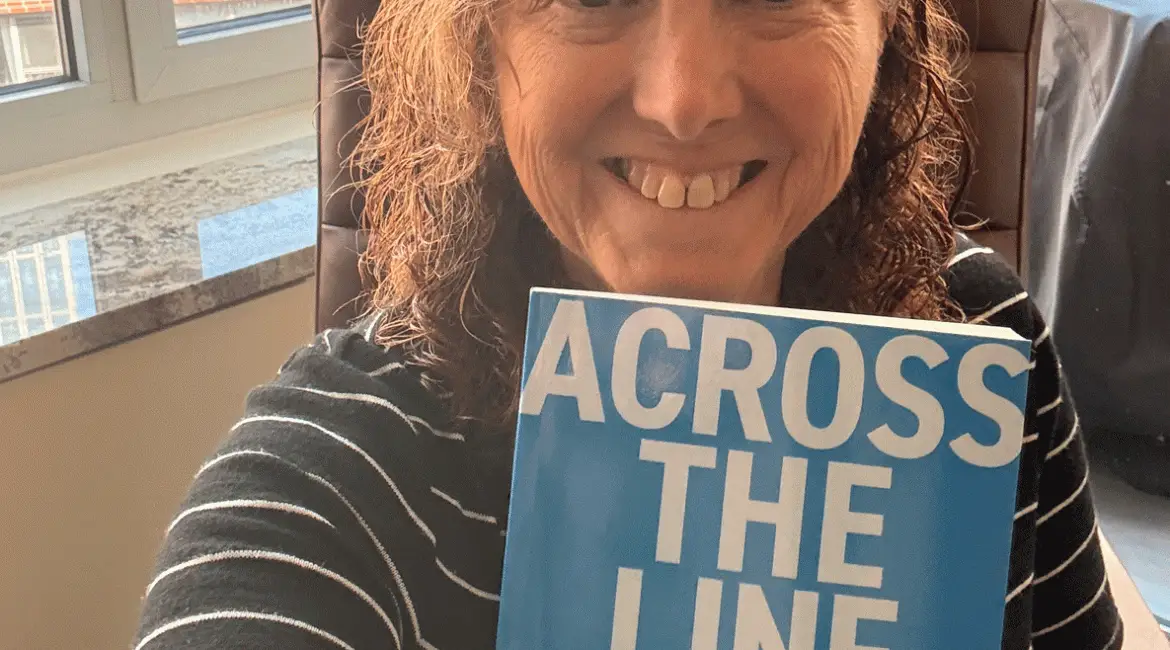
Every so often, a book lands on your nightstand and refuses to let you sleep until you finish it. Sue Reynolds’ Across the Line: The Pursuit of Elite Performance and the Edge of Human Limits did exactly that to me. As a triathlete who has spent plenty of early mornings in the pool and long weekends on the bike, I picked it up expecting inspiration. What I got was something more complicated — and far more interesting.
Who Is Sue Reynolds?
If you read her first book, you already know the setup. Sue lost 200 pounds and, somewhere in that transformation, discovered the athlete hiding inside her all along. That story alone would have been enough to fill a shelf of memoirs. It’s the kind of comeback that makes you believe your own goals aren’t as far out of reach as they feel on a bad training day.
The New Chapter: Training Like an Olympian
In Across the Line, Sue decides she’s not done. She wants to train like an Olympian, so she hires some of the best coaches in the sport to help her do it. We’re talking Bobby McGee for running, Jim Vance for triathlon, and a lineup of names that would make any age-grouper’s jaw drop.
Watching Sue react to these coaches saying “yes” is one of the book’s more endearing parts. She’s genuinely star-struck. And honestly? I get it. Most of us would be too. There’s something charming about a woman who has already accomplished so much still feeling like a wide-eyed rookie when the pros agree to work with her.
Then there’s Daz Smith, the coach from Australia who entered the picture before things took a turn.
When Passion Tips Into Overtraining
Here’s where the book got under my skin, in the way good books do. Sue eventually develops overtraining syndrome, or OTS. As I read the lead-up, I kept wanting to yell at the pages.
She was tired. She said so, over and over. Yet the training kept coming.
As anyone who has coached knows, part of the job is reading your athlete — spotting the moment when “pushing through” becomes “breaking down.” When someone tells you they’re exhausted again and again, that’s your cue to pull back. So I found myself wondering why Daz didn’t ease off the throttle.
But I’d be lying if I put it all on the coach. Sue is a grown, deeply experienced athlete. Why didn’t she pull back? Why didn’t she listen to the body that had carried her through a 200-pound transformation and countless finish lines?
That’s the uncomfortable question at the heart of this book. And I don’t think it has a clean answer.
Different Mindsets in the Same Sport
Reading Sue’s story made me reflect on my own relationship with triathlon, because ours are worlds apart.
For Sue, triathlon is life. It sits at the very center of everything. For me, it’s a huge part of my world — but I work hard to keep it from swallowing my personal life and my family time. It’s a sport. It’s supposed to be fun.
Don’t get me wrong, I’m competitive. But I don’t carry the same fire Sue does. She needs to place. She needs to know where she finished. For me, it’s about the community, the shared suffering at mile 20, the coffee afterward, and the joy of simply being out there.
Neither mindset is wrong. They’re just different ways of loving the same thing. But Sue’s version comes with sharper edges, and Across the Line shows you exactly where those edges can cut.
Listening to Your Body as You Age
Here’s something worth sitting with: Sue is in the 70–74 age group. That’s remarkable, full stop. But it also raises the stakes on the OTS conversation.
As we get older, our bodies whisper before they shout. Recovery takes longer. The “go easy” signals come sooner and matter more. Learning to actually hear those signals is one of the most underrated skills in endurance sport, and it becomes non-negotiable with age.
That’s not a knock on Sue. It’s a reminder for all of us. Your body is the best coach you’ll ever have, and it never lies. The trick is being willing to listen when it tells you to back off.
The Back of the Pack Claim
Toward the end, Sue writes about how nice it is to hang out at the back of the pack and chat with other athletes. And I’ll be honest — I raised an eyebrow.
Sue is an elite athlete. Competition is woven into who she is. I don’t doubt she’s had lovely conversations mid-race, but I’m not convinced she has ever truly lived at the back of the pack, where finishing is the goal and the clock is just a formality. It reads more like an idea she admires than a place she’s genuinely comfortable in.
Maybe I’m wrong. But that’s the kind of honest reaction a good memoir pulls out of you.
Triathlon as a Drug
The biggest takeaway I walked away with is this: triathlon can be a drug.
It pulls you in. It rewards you. And it can absolutely be abused. Look around any transition zone, and you’ll meet people who once battled weight issues, addiction, or alcohol. The sport gave them something healthier to pour that intensity into — which is beautiful. But that same intensity can turn the sport itself into the next compulsion.
Sue’s story sits right in that tension. The very drive that saved her is the drive that pushed her into overtraining. That’s not a flaw in the book. That’s the book’s most important lesson.
Should You Read It?
Absolutely. Across the Line is honest, inspiring, and a little uncomfortable in all the right ways. It celebrates what’s possible while quietly warning you about the cost of chasing it too hard.
If you’re an athlete of any level, read it — then use it as a mirror. Ask yourself where your limits really are, whether you’d actually listen to your body if it begged you to stop, and what role this sport truly plays in your life.