
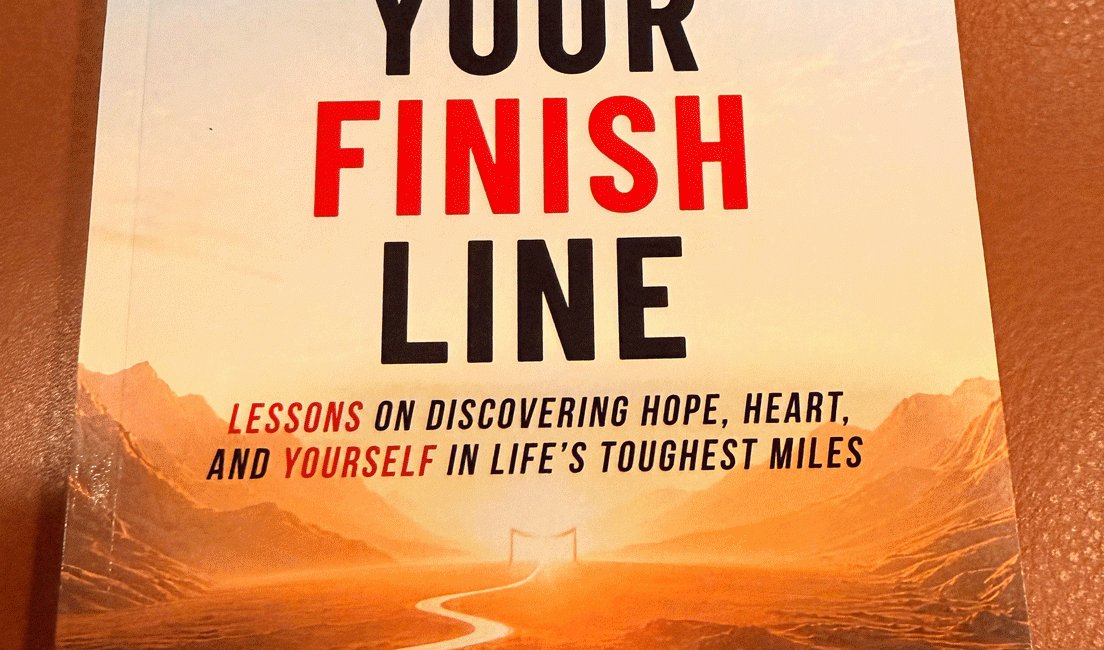
Some books land in your hands at exactly the right moment. Mike Reilly’s Finding Your Finish Line found me flat on the couch, leg propped up, staring at a ceiling I’d been studying for weeks after my knee replacement.
If you don’t know the name, you know the voice. Mike Reilly is “the Voice of Ironman,” the guy who has called more than 400 finish lines and told hundreds of thousands of athletes those four unforgettable words: “You are an Ironman.” So when he decides to write a book about finishing what you start, you lean in. Even from the couch.
A Short Book With a Big Heart
Let me get the practical stuff out of the way, because I know you. You’re training 15 hours a week, juggling swim sets and brick workouts, and you don’t have time for a 400-page slog.
Good news: this book is short, easy to read, and genuinely uplifting. I finished it in a couple of sittings, and I never once felt like I was slogging through filler. Mike writes the way he announces — warm, direct, and full of belief in the person listening. He isn’t lecturing. He’s pulling up a chair next to you and telling you that you’ve got this.
The Structure That Keeps You Turning Pages
Here’s what I loved about how the book is built. Each chapter follows a rhythm that works beautifully:
- It opens with inspiration — an idea or mindset shift to set the tone.
- Then come the stories — and they are real.
- It closes with “The Aid Station” — Mike’s wrap-up of the key takeaways.
That structure makes it easy to read in bites. Finish a chapter on your lunch break, sit with it, come back later. It’s built for busy people who still want to feel something.
The Stories: Everyday Athletes and Legends Side by Side
This is where Mike really shines. He weaves together two kinds of people, and treats them with equal respect.
You’ll read about everyday athletes — folks like you and me who showed up scared, had health issues, or faced adversity and crossed the line anyway. Their stories hit hardest because sometimes, you recognize yourself in them.
Then he brings in the legends. Mark Allen. Lucy Charles-Barclay. Craig Alexander. Mirinda Carfrae. These are champions who have optimized every detail of their performance, and yet what Mike draws out isn’t their splits or their podiums. It’s their grit, their setbacks, and the mindset that carried them through. Turns out the pros and the back-of-the-packers have more in common than you’d think. They all had a moment where they wanted to quit and chose to keep going.
The Aid Station: My Favorite Part
At the end of each chapter, Mike sets up “The Aid Station.” If you’ve raced, you already feel the metaphor in your bones. The aid station is where you refuel, catch your breath, and gather yourself before the next stretch.
In the book, it’s where he distills each chapter into takeaways you can actually carry with you. No fluff. Just the fuel you need to keep moving. I found myself dog-earing these pages so I could come back to them on hard days.
Why This Book Reached Me When I Needed It
I’ll be honest with you, because that’s the only way I know how to write.
Since my knee replacement, I’ve been feeling lost. Recovery is slow. The future feels foggy. When your body is what’s always carried you toward your goals, and suddenly it can’t, you start to wonder who you even are without the miles. I didn’t know where I was going from here.
Then I opened this book.
Mike’s whole message is that the finish line isn’t only the one painted on the pavement. It’s whatever you’re working toward right now — a comeback, a first step, a reason to get up. Reading story after story of people who faced their own detours and kept going gave me something I’d been missing: direction. And permission to define my own next finish line, even one that starts with physical therapy instead of a start corral.
By the last page, I felt lighter. More hopeful. Ready to lace up again someday, and okay with the slow road until then.
Should You Read It?
Yes. Whether you’re chasing a Kona slot, training for your first sprint tri, or simply looking for a lift after a rough season, this book delivers. It’s the kind of read you’ll want to pass along to a struggling training partner, or keep on the nightstand for the days motivation runs dry.
Grab a copy of Finding Your Finish Line, find a quiet corner, and let Mike remind you of something you already know deep down: you have another finish line in you. You just have to go find it.
And when you cross it? I hope you hear his voice in your head.