
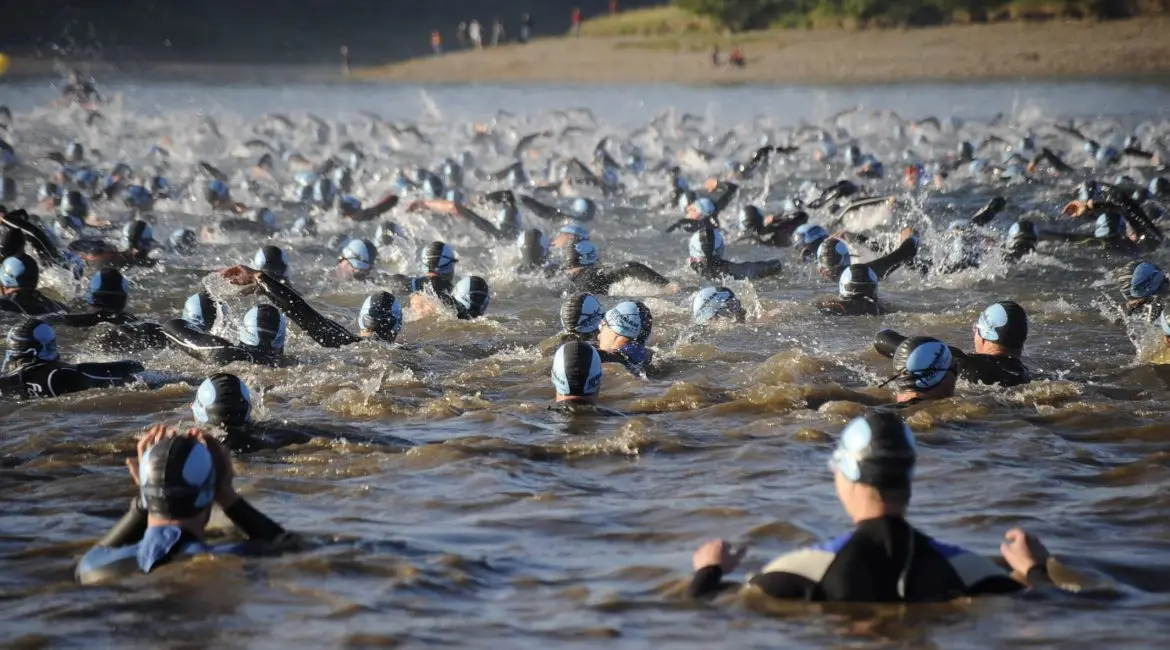
Every year, the triathlon community loses fellow athletes before they ever reach the bike. The swim leg, that thrashing, adrenaline-soaked start we all know so well, remains the deadliest part of our sport. And the numbers aren’t slowing down.
We often blame these tragedies on panic, cold shock, or bad luck. But a growing body of evidence points to something far sneakier, and far more preventable: Swim-Induced Pulmonary Edema, or SIPE. If you’ve never heard of it, you’re not alone. Yet it may be the most important thing you learn before your next open water start.
Before I break this down, I want to thank Sharon Levy of Excel PT for bringing this to my attention.
What Is SIPE, and Why Should You Care?
SIPE happens when fluid leaks into your lungs during swimming. That’s it in plain terms. Your lungs fill with fluid that shouldn’t be there, and suddenly you can’t get the oxygen you need.
Here’s why it catches strong swimmers off guard: SIPE doesn’t discriminate. It strikes fit, healthy, well-trained athletes, sometimes the ones you’d least expect. It’s not about being out of shape or a weak swimmer.
So what actually triggers it? A few factors gang up during an open water swim:
- Cold water constricts blood vessels and shifts blood toward your chest.
- Immersion in a horizontal position increases pressure on your heart and lungs.
- Exertion at race pace ramps up blood flow and pressure even more.
- A tight wetsuit can squeeze your chest and restrict your breathing.
- Overhydration before the race adds extra fluid to the mix.
Put those together at a chaotic mass start, and the pressure inside your lungs’ tiny blood vessels can spike. When that happens, fluid seeps into the air sacs where oxygen should be. The scary part? It can come on fast, and it often mimics the normal breathlessness of hard effort, which is exactly why athletes push through it until it’s too late.
The Symptoms You Can’t Afford to Ignore
Recognizing SIPE early is everything. The problem is that some symptoms feel like the normal chaos of a race swim. Learn to tell the difference. Watch for these warning signs:
- Shortness of breath that feels wrong or won’t ease up, even when you slow down or float.
- Coughing, especially a persistent cough during or right after the swim.
- Pink, frothy, or bloody fluid when you cough. This is a red-alert symptom. Stop immediately.
- Chest tightness or a feeling of pressure, like you can’t fully expand your lungs.
- Gurgling or crackling sounds when you breathe.
- Unusual fatigue or weakness that hits harder than your effort should cause.
- A drop in performance where you’re suddenly gasping despite swimming a comfortable pace.
Here’s the rule: if you’re coughing up pink or frothy fluid, treat it as an emergency. Don’t try to finish the leg. Signal a lifeguard or safety kayak right away and get out of the water. SIPE can escalate quickly, but with prompt care, most athletes recover well.
How to Protect Yourself: Prevention That Works
The good news? You have real control here. Smart preparation dramatically lowers your risk. Build these habits into your routine and share them with your training group.
Warm up before the gun goes off
A proper warm-up eases your body into the effort instead of shocking it. Get in the water beforehand if the venue allows. Let your heart, lungs, and muscles adjust to the temperature and the horizontal position before you’re sprinting off the line.
Rethink your wetsuit fit
Your wetsuit should be snug, not suffocating. A suit that’s too tight around your chest and neck restricts your breathing and adds pressure right where you don’t want it. Test your suit in open water during training, take a few deep breaths, and make sure you can fully expand your chest.
Don’t overhydrate
Drinking gallons before a race won’t help you and may hurt you. Extra fluid in your system gives SIPE more to work with. Hydrate sensibly in the days leading up to your event rather than chugging right before the start.
Acclimate to cold water
Cold is one of the biggest triggers. Train in conditions similar to your race so your body learns to handle the temperature. If your event is in cold water, cold exposure sessions can help your system adapt.
Pace your start
The frantic mass start pushes many athletes into the red immediately. Start controlled. Position yourself where you won’t get boxed in, settle into a rhythm, and let your body ease into race effort instead of exploding off the line.
Know your health
If you have high blood pressure or a heart condition, talk to your doctor before racing in open water. These factors can raise your SIPE risk, and a quick conversation with a professional is worth it.
Never swim alone, and speak up
Train with a buddy, respect the safety crews on race day, and never ignore symptoms to protect your finish time. No result is worth your life. If something feels off, wave for help and get out.
The Bottom Line
We love this sport for the challenge, the community, and the feeling of crossing that finish line. But no PR, no age-group podium, and no bucket-list finish is worth dying for. SIPE is real, it’s dangerous, and it hides in plain sight during the very leg we tend to underestimate.
Learn the symptoms. Follow the prevention steps. And talk about SIPE with your training partners, your coach, and your club. The more of us who understand this condition, the fewer athletes we’ll lose.
Stay safe out there, and I’ll see you at the finish line!