
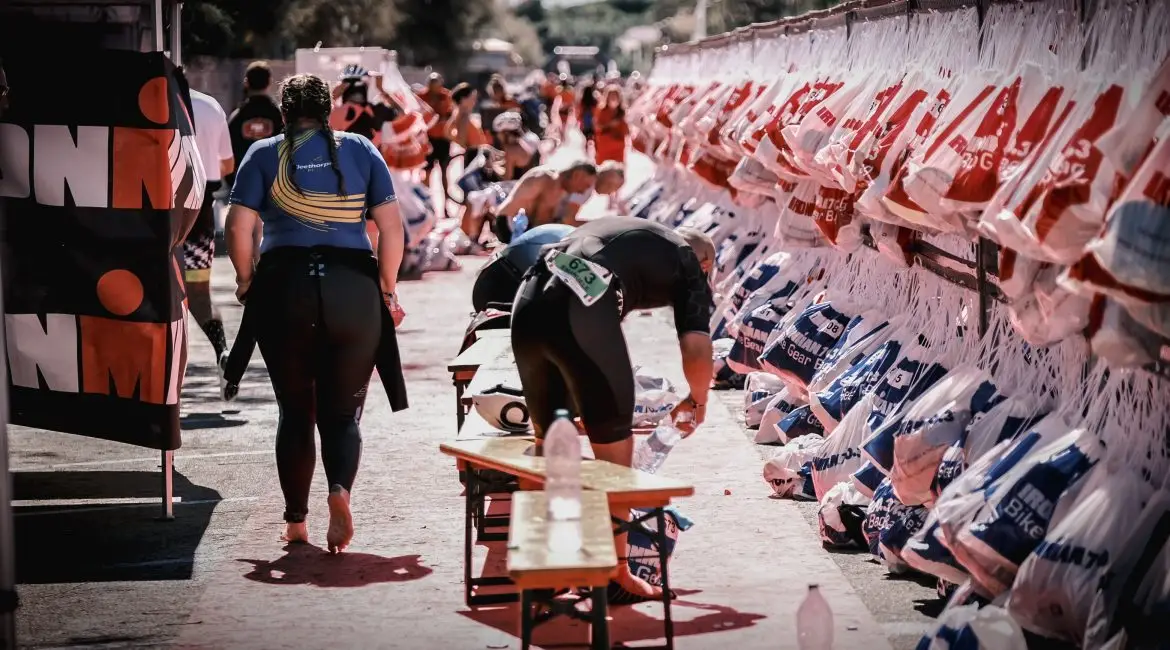
When you sign up for your first triathlon, you’re probably thinking about the swim, the bike, and the run. That makes sense! But there’s a fourth discipline that can make or break your race day: the transition.
I often call it the “fourth sport” of triathlon because it’s that important. As a new triathlete, understanding the transition area—what it is, how it works, and its many rules—is one of the most valuable things you can do to prepare.
So, what exactly is a transition? It’s the designated area where you switch from one discipline to the next. You’ll visit it twice during your race:
T1 (Transition 1): After the swim, you’ll run here to pick up your bike gear and head out for the cycling leg.
T2 (Transition 2): After the bike, you’ll return here to rack your bike, change into your running gear, and head out for the final leg of the race.
Mastering your transitions not only saves you precious minutes at the end but also ensures a smooth, safe, and penalty-free race. Let’s dive into the rules and etiquette you need to know.
Transition Area Etiquette and Rules
The transition area can feel chaotic, especially on your first race day. But it operates under strict rules that keep everyone safe and ensure fairness. Think of it as a shared workspace where respect and order are key.
Arrive Early and Be Prepared
Every race has a designated time when the transition area closes. This is usually 15-30 minutes before the first wave of swimmers starts. Once it closes, no one is allowed back in. This rule is non-negotiable. I’ve seen athletes miss their races for arriving just two minutes late. Don’t let that be you!
Arrive at the race venue with plenty of time to spare. You’ll need to pick up your race packet, get your body marked with your race number, and find your designated spot at the bike racks. Setting up your gear takes time, and you don’t want to feel rushed. A calm setup leads to a calm race.
Keep Your Gear Contained
When you find your spot at the bike rack, you’ll notice the space is limited. Your spot is yours, but it ends where your neighbors begin. Lay a small, brightly colored towel next to your bike to mark a clear boundary for your gear. Place only what you need for the race on that towel.
This includes your helmet, cycling and running shoes, sunglasses, race belt, and nutrition. Avoid bringing your entire gear bag into the transition area. Keep it neat and compact. Spreading your equipment all over the place is a major breach of etiquette and can create a tripping hazard for other athletes.
Transition is for Athletes Only
You might want your family and friends to help you set up or cheer you on, but the transition area is reserved for competitors. Race officials need to maintain security and ensure a safe environment. With hundreds of expensive bikes and athletes moving quickly, extra people create congestion and risk.
Your number will be checked every time you enter or exit the transition area. This security measure ensures that only registered athletes are present and that you are leaving with the correct bike. It may seem repetitive, but it’s for your protection. Have your family meet you at designated spectator spots along the course and at the finish line.
Why You Can’t Get Your Stuff Right Away

After you’ve triumphantly crossed the finish line, your first thought might be to pack up your gear and head home. However, the transition area will remain closed until the final cyclist has completed the bike leg and headed out for their run.
This is a matter of safety and fairness. Athletes are still racing and need clear, unobstructed paths to rack their bikes and start their run. Imagine trying to navigate a crowd of people packing up while you’re exhausted and trying to finish your race. The rule ensures that every athlete, from first to last, has the same safe race experience. Be patient, cheer on the remaining athletes, and celebrate your finish.
Common Transition Mistakes to Avoid
The transition area has many specific rules that can trip up new athletes. Breaking them can result in a time penalty or even disqualification. Here are some of the most common mistakes I see, along with how to avoid them.
- Helmet Rules Are Non-Negotiable — Your helmet is the most important piece of safety gear you have. Race officials are extremely strict about helmet rules. Remember this simple mantra: helmet on before you touch your bike, and don’t unclip it until your bike is racked.
- Mistake in T1: Unracking your bike before your helmet is on and securely clipped.
- The Fix: In T1, your helmet should be the first thing you put on. Once it’s clipped, then and only then can you unrack your bike.
- Mistake in T2: Unclipping your helmet before your bike is safely back on the rack.
- The Fix: In T2, after you cross the dismount line, run your bike to your spot. Rack your bike first. Only after the bike is secure can you unclip and remove your helmet.
A common sight is athletes running through T2 after racking their bikes, only to realize their helmets are still on! It happens, but try to make removing it part of your T2 flow. You don’t want to run with the helmet on! 😊
Respect the Mount and Dismount Lines
Every course will have a clearly marked mount line as you exit T1 and a dismount line as you enter T2. You cannot get on your bike until you are past the mount line, and you must be off your bike before you reach the dismount line.
- Mistake in T1: Mounting your bike too early. This is dangerous for you and for the athletes around you.
- The Fix: Run with your bike past the mount line. Find a clear spot on the side of the road to safely get on your bike and start pedaling.
- Mistake in T2: Riding past the dismount line. This is a serious safety violation and will almost certainly result in a penalty.
- The Fix: As you approach T2, slow down, unclip one foot, and prepare to swing your leg over. Be completely off your bike before you cross the line, then run it to your rack.
It’s Not Just About Speed; It’s About Rules
In a world of instant gratification, it’s easy to focus only on being fast. And yes, a quick transition is a great goal. But for new athletes, especially our younger Gen Z and Gen Alpha competitors, learning the sport’s structure and rules is just as valuable.
Triathlon teaches discipline, respect for fellow competitors, and the importance of following procedures. These skills extend far beyond the finish line. Take time to practice your transitions at home. Lay out your gear and go through the motions of T1 and T2. This muscle memory will be invaluable on race day, helping you stay calm and automatically follow the rules.
By understanding and respecting the transition process, you set yourself up for a successful and enjoyable first triathlon. You’ll feel more confident, stay safer, and focus on what matters most: doing your best and having fun. Welcome to the sport of triathlon!