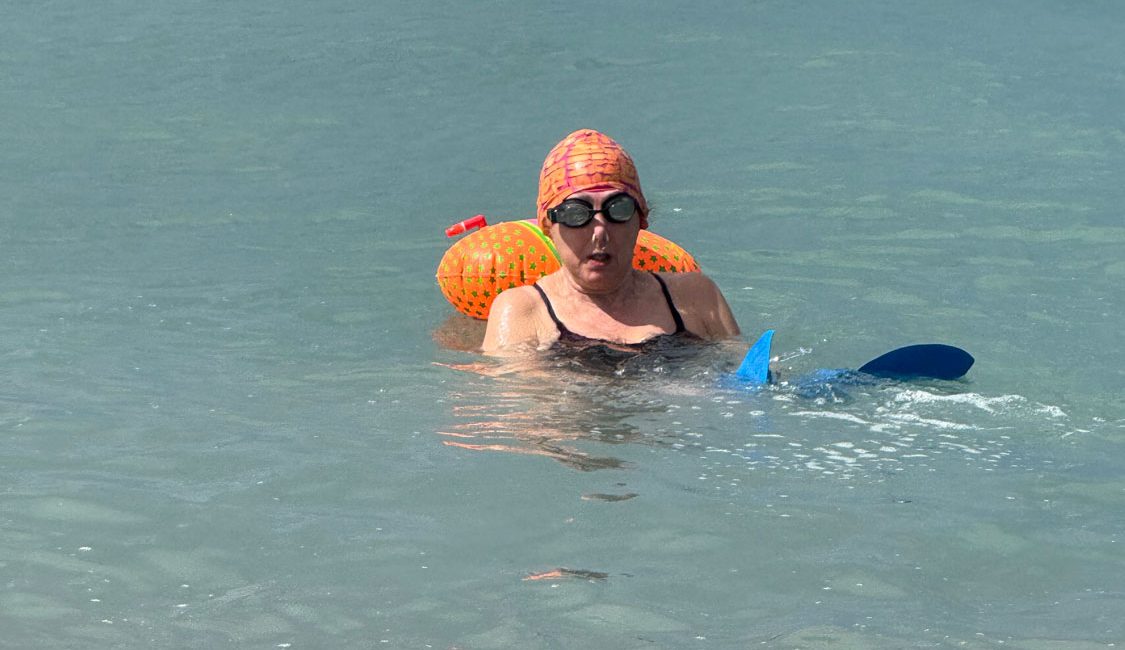
I still remember the first time I slipped on a pair of fins in open water. I was floundering through a choppy lake, lungs burning, kicks going nowhere, and everyone around me seemed to be moving super fast. Then I clipped into my fins, and suddenly I felt as if I were really moving.
Here’s what I can’t figure out, though: for some reason, newbies and experienced triathletes alike don’t want to use fins or paddles in open water. Open water seems to be everyone’s weakness, so why not try a few swim toys to improve your stroke? If you’ve been treating fins and paddles as pool-only gear, let me tell you—you’re leaving serious gains on the table.
These two simple tools have become my go-to training partners in open water, and they can do the same for you whether you’re prepping for your first sprint tri or chasing a podium finish.
Fins: Your Secret Weapon for Kick and Endurance
Let’s talk fins first, because they’re honestly the easiest win.
When you’re new to open water, your legs tend to sink and drag like an anchor. Fins fix that fast. They lift your hips, level out your body position, and teach you what proper streamline actually feels like. That muscle memory sticks with you long after the fins come off.
For my more experienced friends, fins are about pushing intensity. Strap them on, and you can hold faster paces for longer sets, building that aerobic engine without burning out your shoulders. They also strengthen your ankles and improve flexibility, which translates to a more powerful, efficient kick on race day.
Here’s how I use them:
- Beginners: Use fins for steady swims to feel correct body position and build confidence in deeper water.
- Experienced swimmers: Add fins to fast interval sets to overload speed and train your cardiovascular system.
A quick word on safety—in open water, fins help you cover ground faster and fight currents, which is a real confidence booster when you’re far from shore. Just ease into longer fins gradually so your ankles can adapt.
Paddles: Building Strength and Stroke Efficiency
Now for paddles, the tool that took my pull to a whole new level. I saw a man swim around Mackinac Island (an 8.2-mile swim) using paddles. I thought, “God bless him!” I didn’t think I could do that. But then I tried using paddles in the open water, and they really help you lock in your catch.
Paddles increase the surface area of your hand, so every stroke catches more water. That extra resistance builds upper-body and back strength in a way nothing else quite matches. After a few weeks of consistent paddle work, you’ll feel the difference the moment you swim without them—your hands grip the water like never before.
But paddles do more than build muscle. They’re fantastic feedback tools. If your catch is sloppy or your hand entry is off, the paddle will let you know immediately by slipping or pulling unevenly. That instant feedback helps you clean up your stroke and swim more efficiently.
How I work them into training:
- Beginners: Start with smaller paddles to dial in your catch and feel the water without straining your shoulders.
- Experienced swimmers: Use paddles for strength-focused sets, especially against the current.
Why Both Tools Shine in Open Water
Pool training is great, but open water is a different beast. There’s chop, current, sighting, and zero black line to follow. That’s exactly why fins and paddles are so valuable out there.
Fins keep you stable and efficient when waves try to throw off your rhythm. Paddles reinforce a strong, deliberate pull that powers you through rough water instead of getting tossed around by it. Together, they help you swim with confidence in the very conditions you’ll face on race day.
I love alternating them in my open water sessions—fins for a few laps to lock in body position, paddles for a few to hammer strength, then a stretch with neither to feel everything come together. By the end, my stroke feels smoother, stronger, and more relaxed.
Time to Make a Splash
Fins and paddles aren’t shortcuts—they’re tools that make you a smarter, stronger swimmer. When I trained for both Maggie Fischer and the Mackinac Island Swim (an 8.2-mile swim), I used fins for training. Of course, during a race, you can’t use them, but they do help with muscle memory.
So, whether you’re just learning to love open water or you’re hunting a new personal best, these two pieces of gear can transform your training.